



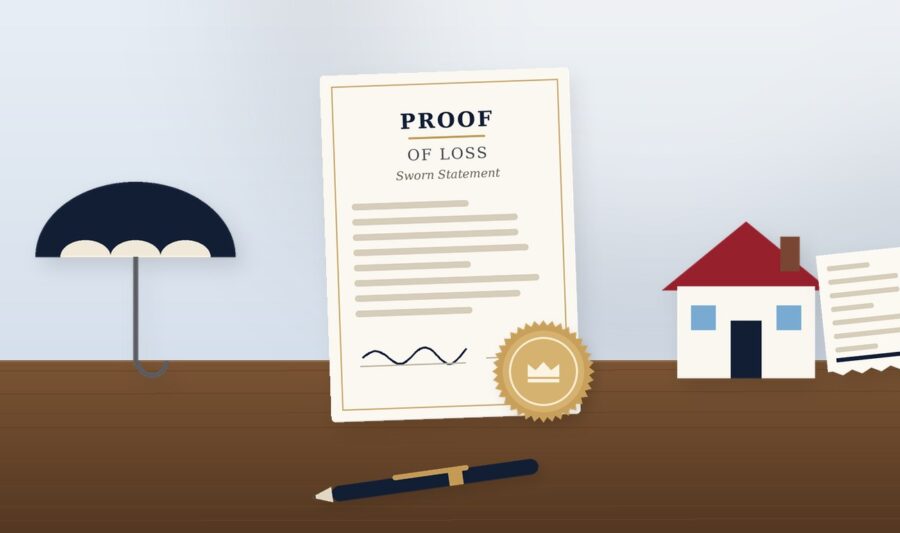
When you make a property or contents claim, your insurer may ask you to complete a proof of loss, a formal statement describing what happened and what was lost or damaged. Many insurers require this statement to be sworn or declared before a commissioner or notary.
What a proof of loss usually covers
- the date, time and cause of the loss;
- a description or list of damaged or stolen property;
- the amount being claimed;
- information about other insurance and ownership of the property.
Your insurer or adjuster will usually provide the form and explain what needs to be included.
Getting it commissioned
- Complete the form fully, attaching any schedules or inventories the insurer requires.
- Do not sign it in advance.
- Bring valid photo ID for each person who must sign (for example, all named insureds).
- At the appointment, we administer the oath or declaration, witness your signature and apply our stamp.
Important reminders
- Pay attention to your insurer’s deadline for submitting the proof of loss.
- Be accurate. A sworn proof of loss is a serious legal statement.
- We don’t assess your claim, negotiate with insurers or advise on coverage. For that, speak with your adjuster, broker or a lawyer.
Can’t leave home?
If damage to your home makes an office visit difficult, our mobile service can come to you.
Related reading
- What is a statutory declaration?
- Affidavit vs. statutory declaration
- Mobile notary service: what to expect
- Notarization mistakes to avoid
- What ID do you need for notarization in Ontario?
Book with Crown Seal Notary
Crown Seal Notary serves Hamilton and the surrounding area seven days a week. In-office appointments are available at 21 King St W, 5th Floor, and our mobile service comes to your home, workplace, hospital or care home. To book, call 289-207-0851, email info@csnotary.org, or book online. You can also browse all of our services or read our FAQs.
Please note: Crown Seal Notary provides notarization and commissioning services only. We do not provide legal, immigration or financial advice, and we cannot tell you what to write in your document. If you are unsure which document you need, please check with the organization that asked for it or speak with a lawyer or licensed paralegal.